Today we take a look into the heart of modern music production: the Digital Audio Workstation, more commonly known as a DAW. This powerful tool is the unsung hero behind every beat drop, guitar riff, and harmonized vocal you’ve ever tapped your foot to. Much like a chef’s kitchen, it’s where all the ingredients come together to create something delicious for the ears.
For those eager to understand how today’s hit tracks are cooked up, we’re pulling back the curtain on this pivotal piece of software. We will discuss what a DAW is, our top picks, and even how to choose the right one. So, tune in as we turn up the knowledge and discuss what is a DAW in music!
TABLE OF CONTENTS
What Is A DAW?
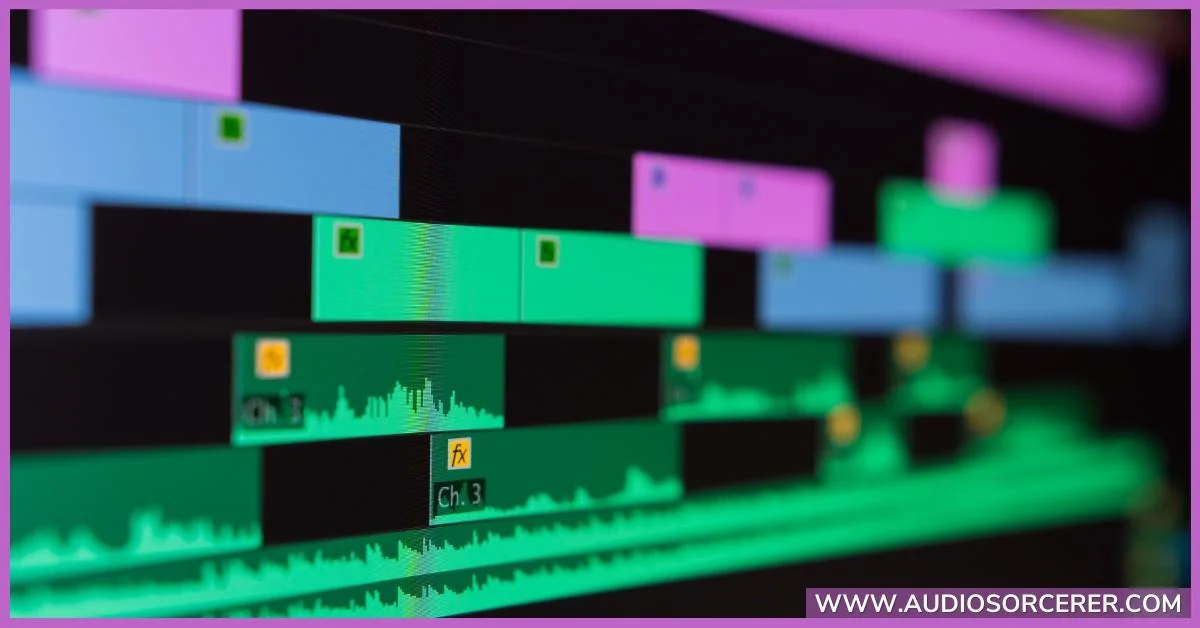
The Digital Audio Workstation, or DAW, is a software application designed for recording, editing, mixing, and mastering music. It is the electronic hub of modern music production, serving as the central platform where the magic of creating and refining tracks happens.
DAWs can handle everything from creating audio recordings of individual music elements to the final mixing and mastering processes. They allow musicians and engineers to capture raw audio from voices, acoustic instruments, electronic instruments, and synthesizers. They then can arrange, modify, and blend these sounds into a finished piece of music.
More than a mere recording tool, a DAW is like a fully equipped digital music studio contained all within your computer. It offers a plethora of tools like equalizers, compressors, and reverb effects to manipulate and edit audio, alongside a range of virtual instruments and synthesizers.
Whether it’s for crafting the latest pop anthem, scoring a movie, creating a podcast, or producing a radio jingle, the DAW is a versatile and indispensable tool in the audio creation process. With a DAW, the power to produce professional quality audio is quite literally at your fingertips.
The Top 5 Best DAWs
How that we’ve discussed what is a DAW in music, let’s talk about some of the best options out in the market today for music production software.
1. Avid Pro Tools
#1
Top Pick
Avid Pro Tools
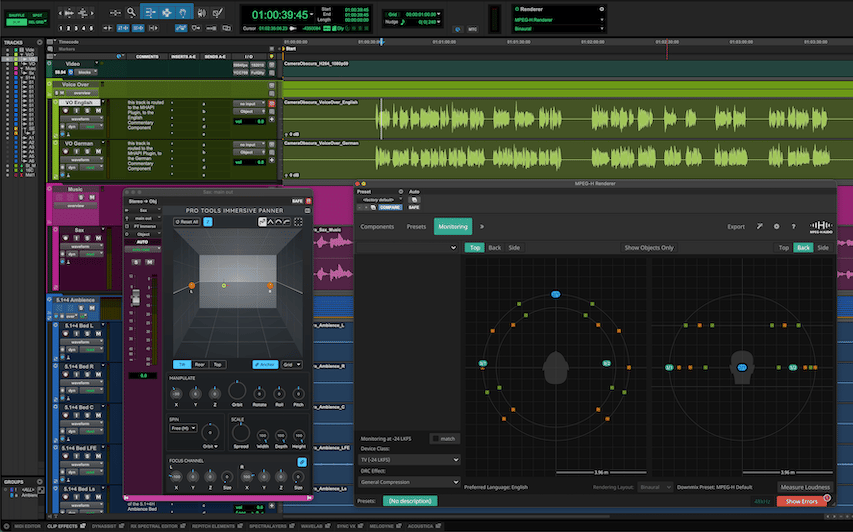
Avid Pro Tools stands as a titan in the world of Digital Audio Workstations. Esteemed as the industry standard in music and audio production, it’s a go-to choice for many professionals who demand a blend of power, versatility, and intuitive design. This DAW shines in its ability to handle complex projects, while delivering unrivaled sound quality.
The editing capabilities of Pro Tools are a key highlight, providing users with extensive control over every aspect of their audio. With this DAW software, fine-tuning your audio to perfection or adding creative effects becomes a breeze. Moreover, Pro Tools excels in the realm of mixing and automation, offering a traditional console layout that professionals find both familiar and efficient, along with intricate yet user-friendly automation features for seamless control over mix parameters.
What further sets Pro Tools apart is its unique focus on collaboration. Thanks to Avid Cloud, multiple users can work on a project simultaneously from any location, making it an excellent choice for remote teams. When it comes to a DAW that balances creative power with professional-grade features, Avid Pro Tools is undoubtedly a top contender.
2. Apple Logic
#2
Top Pick
Apple Logic
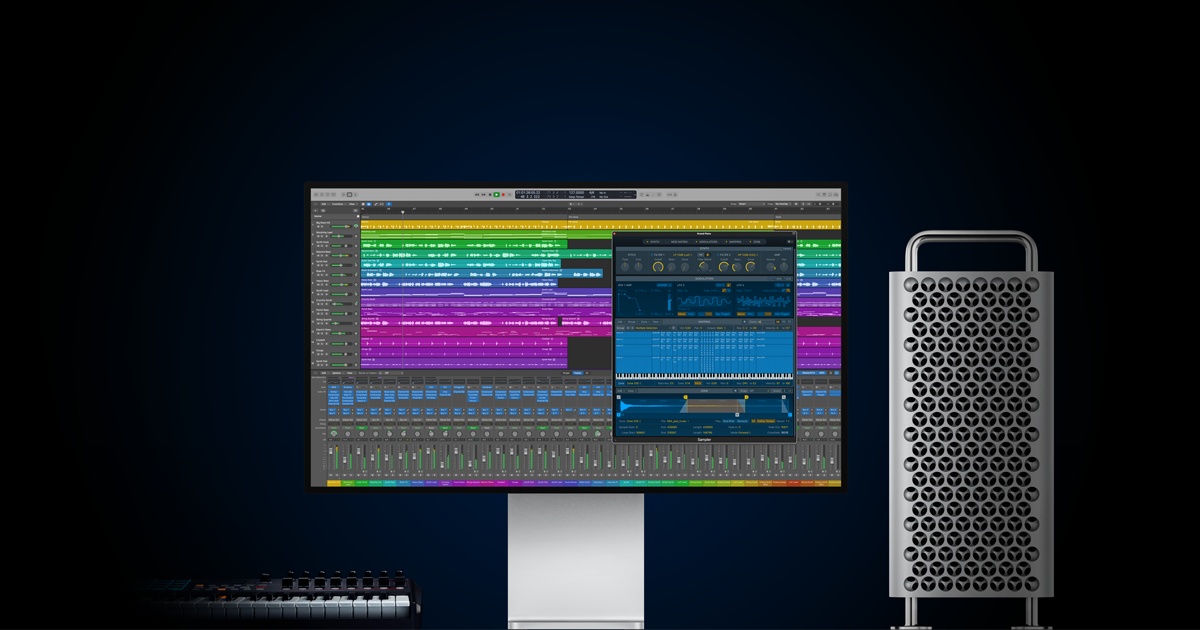
Apple Logic Pro is a powerhouse in the world of Digital Audio Workstations, earning its reputation as a favorite among music producers and sound engineers alike. Known for its seamless blend of professional features and user-friendly interface, Logic Pro offers a platform suitable for both high-end production and intuitive creative exploration. Its robust capabilities can handle everything from intricate compositions to simple podcast editing.
At the core of Logic Pro’s appeal is its extensive suite of music creation tools. From its impressive library of virtual instruments and loops to its advanced sampler and drum machine, Logic Pro provides a treasure trove of resources to produce music. The DAW also excels in its sophisticated editing and mixing capabilities, offering a range of precision tools that make finessing your audio an intuitive and rewarding process.
One of Logic Pro’s standout features is its integration with the broader Apple ecosystem. This includes compatibility with GarageBand, allowing projects to be easily transferred between the two, and the ability to use your iPad as a second control surface via the Logic Remote app. These features, coupled with its affordability compared to other professional-grade DAWs, make Apple Logic Pro a stellar choice for anyone looking to harness the full potential of a DAW in their audio creation journey.
3. Steinberg Cubase

#3
Top Pick
Steinberg Cubase
When it comes to versatility and innovative capabilities in the Digital Audio Workstation universe, Steinberg Cubase holds a prominent position. Celebrated by composers, sound engineers, and producers worldwide, Cubase is a robust DAW that blends professional-grade features with a user-friendly design. Whether you’re orchestrating a symphonic masterpiece or crafting a punchy electronic beat, Cubase is up to the task!
Central to Cubase’s appeal is its comprehensive suite of music production tools. It boasts a wide array of virtual instruments, a vast loop library, and advanced audio and MIDI tools. The DAW’s editing and mixing features are notably extensive, giving users the flexibility to manipulate sound with pinpoint precision. The Control Room feature, which provides advanced routing options for recording and monitoring, is a significant advantage for those working in professional studio settings.
One of Cubase’s defining characteristics is its pioneering spirit. The software has been at the forefront of many key developments in DAW technology over the years, including the introduction of VST (Virtual Studio Technology) and advanced MIDI sequencing. This, combined with its exceptional scalability and adaptability, makes Steinberg Cubase a superb choice for audio professionals and enthusiasts seeking a DAW that will grow with their needs.
4. PreSonus Studio One

#4
Top Pick
Presonus Studio One
With a unique fusion of power, flexibility, and ease-of-use, PreSonus Studio One has firmly established its place in the Digital Audio Workstation landscape. It’s a preferred choice for many musicians, sound engineers, and producers looking for a DAW that pairs professional capabilities with an intuitive, streamlined workflow. From complex music production tasks to straightforward audio editing, Studio One ensures top-tier sound quality in all endeavors.
Studio One’s arsenal is packed with a wide range of song creation tools. It offers an impressive array of virtual instruments, a comprehensive loop library, and a powerful drag-and-drop functionality that makes composing and arranging a breeze. The DAW also excels in editing audio and its mixing capabilities, allowing users to achieve precise control over every facet of their sound.
What sets Studio One apart is its emphasis on a fast, efficient workflow. The software’s innovative features like the single-window work environment, powerful search and navigation tools, and integrated mastering suite significantly streamline the music production process. Additionally, with seamless hardware integration, PreSonus Studio One is a standout choice for those seeking a DAW that is as efficient as it is powerful.
5. Ableton Live
#5
Top Pick
Ableton Live
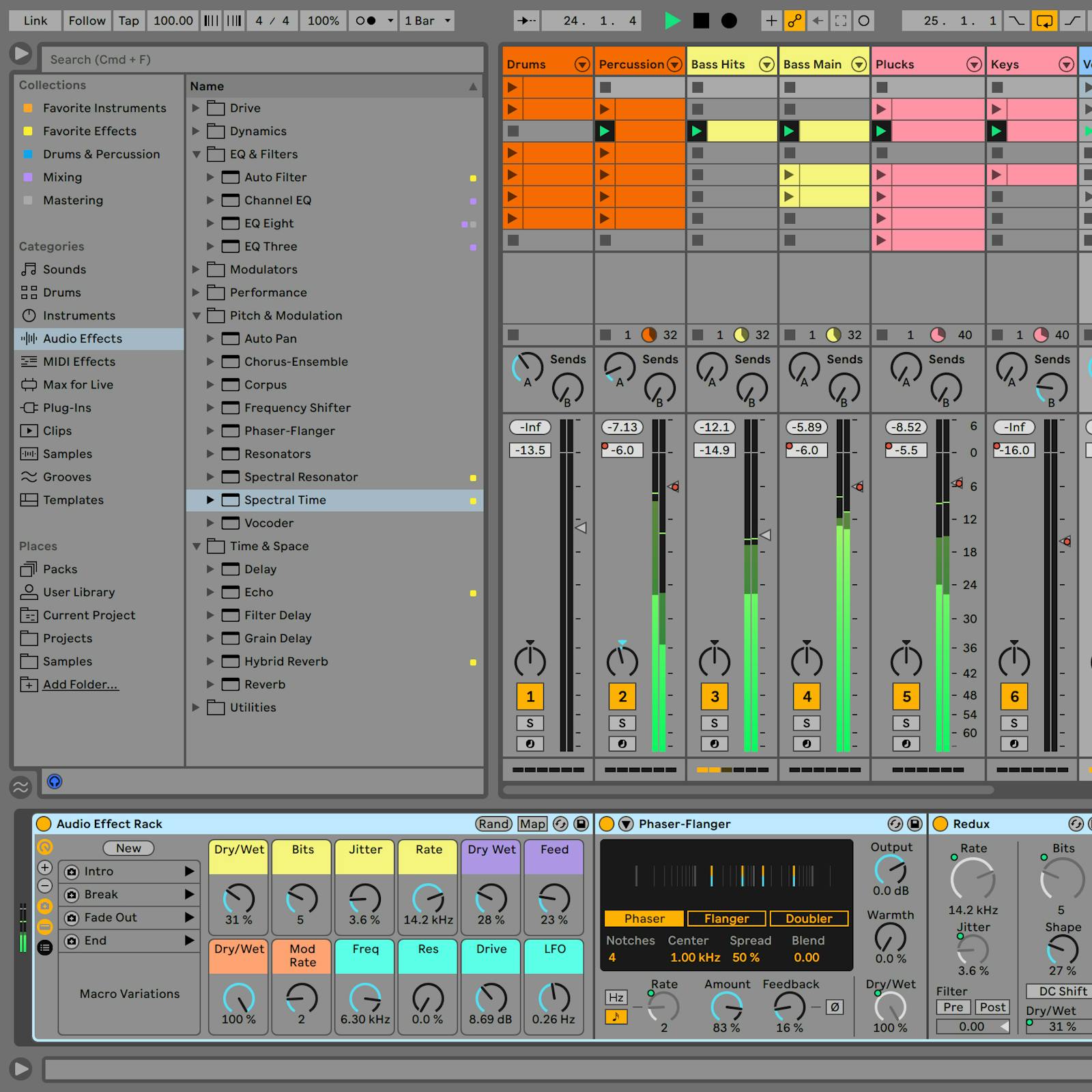
Ableton Live has carved out its own unique niche in the Digital Audio Workstation arena, known for its strong focus on live performances and its interface that caters to real-time tweaking and improvisation. This trailblazing DAW is a top pick for electronic music producers, DJs, and live performers who crave a tool that offers professional-level features without sacrificing creative spontaneity.
Key to Ableton Live’s distinct appeal is its innovative Session View—a non-linear grid for recording and playing back musical ideas in any order. This, along with a comprehensive suite of virtual instruments, audio effects, and MIDI tools, forms a powerhouse for creative music production and performance. The DAW’s advanced warping features let you manipulate timing and tempo with remarkable ease, and its deep editing and mixing capabilities give you granular control over your sound.
The game-changer, however, is Ableton Live’s seamless live performance integration. The software’s ability to sync with various hardware and software, and the smooth transition between studio production and on-stage performance, has made it a favorite among live performers around the globe. This, combined with its user-friendly interface and solid community support, makes Ableton Live a dynamic choice for those looking for a DAW that pushes the boundaries of traditional music production and performance.
How To Choose The Right DAW?
Choosing the right Digital Audio Workstation (DAW) depends largely on your specific needs, preferences, and the kind of work you’ll be doing. Let’s consider the DAWs we’ve discussed and how you might select the one that fits you best.
Firstly, define your needs. Are you aiming for high-quality music production, live performance, sound design, or audio recording and editing? Maybe you want a DAW that can do it all.
If professional audio production in a studio environment is your goal, Avid Pro Tools might be your best bet. Its advanced editing, mixing, and collaboration features are industry-standard, offering everything you need for intricate audio work.
For Apple users, or those transitioning from GarageBand looking for a more powerful platform, Apple Logic Pro offers an impressive array of features and seamless integration with other Apple applications. It provides a balance of professional capabilities and an intuitive interface that’s hard to beat.
Steinberg Cubase is renowned for its versatility and innovative capabilities, making it a great choice if you’re seeking a DAW with pioneering features and professional-grade tools. Its advanced MIDI sequencing and introduction of VST technology make it a favorite among those who compose music.
PreSonus Studio One stands out for its emphasis on an efficient, user-friendly workflow. Its single-window work environment and integrated mastering suite make it ideal for musicians and producers who value a streamlined, creative process.
If your work leans heavily towards live performances, especially in electronic music and DJ sets, Ableton Live is likely the top choice. Its real-time tweaking capabilities and the innovative Session View are designed specifically for live improvisation and performance.
Remember, every DAW comes with its own learning curve. Take advantage of free trials, watch tutorials, and experiment with different DAWs to see which one feels the most intuitive and enjoyable for you. It’s important to remember that there’s no definitive ‘best’ DAW—only the one that best suits you and your music.
Related Article: The Best FREE DAWs Of 2024 | Our Top 3 Picks!
Frequently Asked Questions (FAQs)
What is a DAW in music and what is it used for?
A DAW, or Digital Audio Workstation, is the software application that modern music producers, recording engineers, and composers use to record, edit, arrange, mix, and master audio and MIDI within a computer-based production environment. It is the central hub of virtually every contemporary music production workflow — replacing the analog tape machines, mixing consoles, outboard gear racks, and editing suites that defined professional recording studios in previous decades with a single integrated software environment that can perform all of those functions and more. A DAW allows a producer to record live instruments and vocals through an audio interface, program virtual instruments and drum machines using MIDI, arrange recorded and programmed elements into a song structure on a timeline, process every element with plugins for EQ, compression, reverb, and effects, and deliver a finished, mixed, and mastered audio file ready for streaming, physical release, or sync licensing — all within the same application. Whether the context is a professional commercial studio, a bedroom producer's laptop setup, or a film scoring stage, the DAW is the tool that makes modern music production possible.
What is the best DAW for beginners learning music production?
There is no single best DAW for beginners because the right choice depends on the type of music being made, the computer platform being used, and the specific workflow the producer wants to develop. That said, several DAWs are consistently recommended as strong starting points for new producers. GarageBand is the most accessible entry point for Mac users — it is free, included with every Mac and iOS device, and shares a significant portion of its interface logic with Logic Pro, making it a natural stepping stone into more advanced production. Logic Pro itself is widely considered one of the best value DAWs available, offering a professional feature set at a one-time purchase price that is modest compared to competing professional software. Ableton Live is the dominant choice for electronic music, beat-making, and live performance workflows due to its unique Session View and clip-based arrangement system. FL Studio has a long history as a beat-making platform and remains enormously popular among hip-hop and electronic producers. For beginners, the most important factor is often simply choosing a DAW and committing to learning it deeply rather than switching between options — the fundamentals of recording, editing, mixing, and arrangement are transferable across every major platform.
What is the difference between a DAW and an audio interface?
A DAW and an audio interface are two distinct and complementary components of a modern recording setup that are frequently confused by beginners. A DAW is software — the application running on a computer that records, edits, arranges, and processes audio. An audio interface is hardware — a physical device that connects microphones, instruments, and other audio sources to a computer by converting analog audio signals into digital data that the DAW can record and process. In practical terms, the audio interface is the gateway through which sound enters and exits the computer, while the DAW is the environment in which that sound is captured, shaped, and turned into a finished recording. A basic home studio setup requires both — a microphone or instrument plugged into an audio interface connected to a computer running a DAW — and neither component can perform the other's function. Some entry-level DAWs like GarageBand can record audio directly through a computer's built-in microphone input, but a dedicated audio interface is essential for any serious recording work due to its superior preamp quality, lower latency, and professional connectivity options.
How much does a professional DAW cost, and are there free options worth using?
Professional DAW pricing varies considerably across the market, from completely free options to premium software with ongoing subscription costs. At the free end, GarageBand for Mac and iOS is a genuinely capable production tool at no cost, and Audacity remains a widely used free option for basic recording and audio editing, though it lacks the full production capabilities of a modern DAW. Reaper offers a fully functional download with an inexpensive personal license that makes it one of the most affordable professional-grade options available. Mid-tier options like FL Studio and Studio One offer one-time purchase pricing in the range of a few hundred dollars with free lifetime updates included on certain editions. Logic Pro sits at a similar one-time price point and represents exceptional value for the depth of its feature set. At the premium end, Pro Tools — the industry standard in professional commercial studios and post-production facilities — has moved to a subscription model with ongoing annual costs, reflecting its position as the dominant platform in high-end professional environments. For most independent producers and home studio engineers, a mid-tier one-time purchase DAW offers all the capability needed for professional-quality work without the ongoing financial commitment of a subscription.
Does it matter which DAW you use, or do they all produce the same quality audio?
At a fundamental technical level, all modern professional DAWs are capable of producing audio at the same quality ceiling — the differences in output quality between a mix finished in Pro Tools, Logic Pro, Ableton Live, or any other major platform are negligible when the engineer has a thorough command of the tools available to them. The DAW itself does not determine the quality of the music or the mix — the skill, taste, and experience of the person using it does. Where DAWs genuinely differ is in workflow, interface design, bundled instruments and plugins, MIDI capabilities, audio engine behavior at different sample rates, and the specific use cases each platform is optimized for. Pro Tools remains the standard in professional post-production and commercial studios largely because of its superior audio editing capabilities and the industry familiarity that makes collaboration seamless. Ableton Live has features for live performance and electronic music production that no other DAW replicates as effectively. Logic Pro's bundled instrument and plugin library is among the deepest of any DAW at its price point. The practical advice for any producer is to choose the DAW that best fits their specific workflow and genre, learn it as deeply as possible, and trust that the quality of the work will be determined by the decisions made within the software rather than by which application is running.
Final Thoughts
Stepping into the world of Digital Audio Workstations can feel a bit like setting foot on a new planet, full of potential and teeming with unfamiliar features. However, once you understand the terrain and find the right DAW that suits your musical objectives, you’ll discover it’s less of a foreign world and more of a fertile playground for your creative ideas.
Whether it’s Avid Pro Tools with its high-grade professional features, Apple Logic Pro’s user-friendly integration within the Apple ecosystem, Steinberg Cubase’s pioneering approach, PreSonus Studio One’s efficient workflow, or Ableton Live’s live performance excellence, there’s a DAW out there tailored to your unique audio needs.
Remember, the ‘best’ DAW isn’t about what’s popular or industry-standard—it’s about what works best for you. Take the time to explore, experiment, and learn. Before you know it, you’ll be wielding your DAW like a seasoned maestro, conducting your own symphony of sounds in the thrilling arena of audio production. Happy creating!
“Some of the links within this article are affiliate links. These links are from various companies such as Amazon. This means if you click on any of these links and purchase the item or service, I will receive an affiliate commission. This is at no cost to you and the money gets invested back into Audio Sorcerer LLC.”